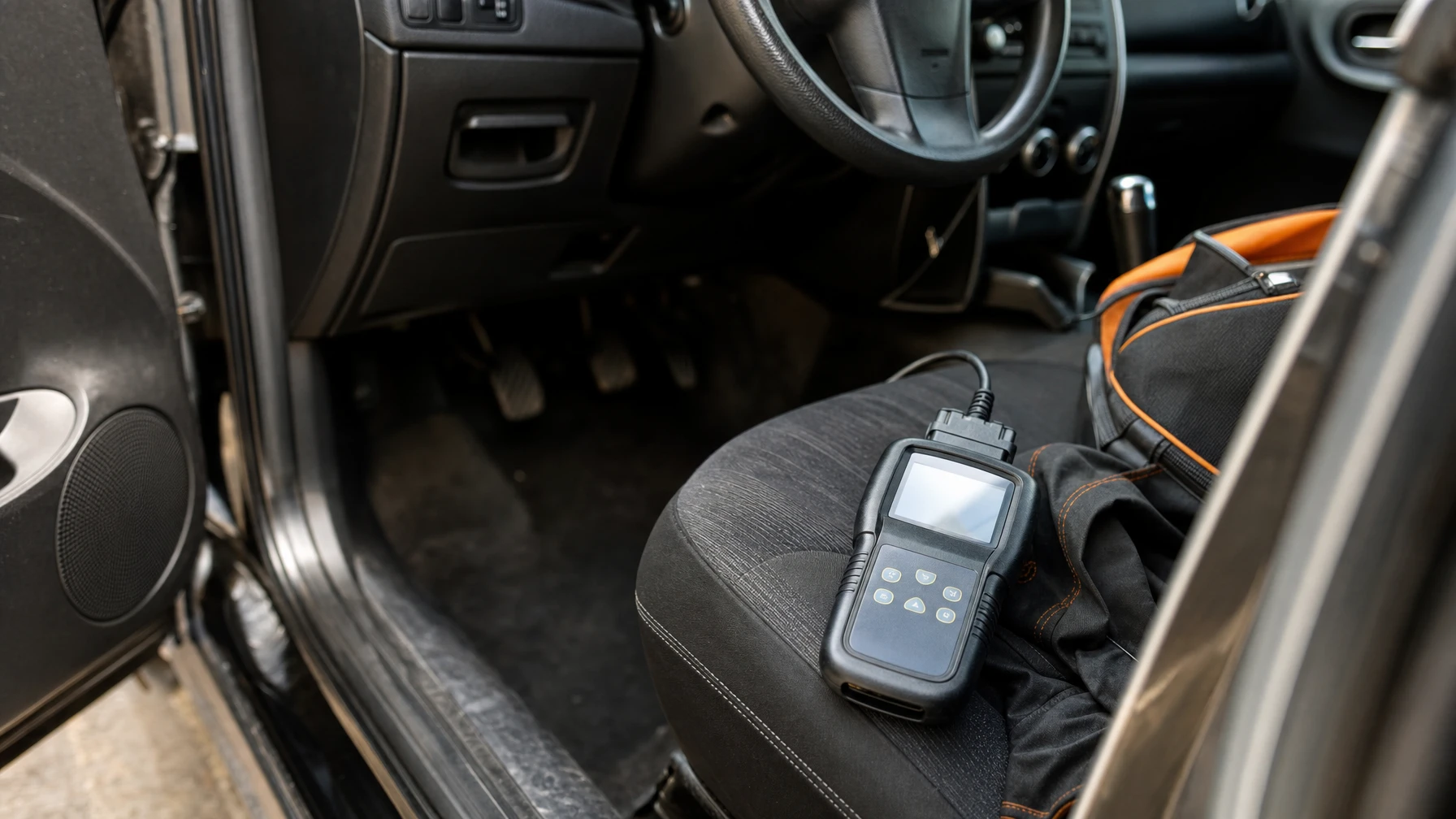
A check engine light is annoying, and the instinct is to just make it go away. You can reset it — but before you do, it’s worth understanding what that actually accomplishes (and what it doesn’t). Here’s how to reset, clear, or turn off a check engine light, and when it actually makes sense.
How to Reset a Check Engine Light
There are three common ways to clear the light, and the same scanner a check engine light diagnostic starts with can do it properly:
- OBD-II scanner (the right way). Plug a code reader into the port under the dashboard and use the “erase” or “clear codes” function. Cheap scanners and many phone apps can do this. This also lets you read the code first — which you should.
- Let it reset itself. If the underlying problem is genuinely fixed, the light will usually turn itself off after several “drive cycles” (a mix of driving conditions over a day or two).
- Disconnecting the battery (not recommended). Yes, it can clear the light, but it also wipes your radio presets, clock, and other learned settings — and it doesn’t fix anything. Skip it.
Will the Check Engine Light Come Back After You Reset It?
Almost certainly — if you didn’t fix the cause. Clearing a code doesn’t repair anything; it just erases the message. The computer keeps monitoring, and the moment it detects the same fault again, the light returns, usually within a few drive cycles. If you reset it and it stays off, that’s actually a good sign the problem was something minor (like a loose gas cap) that’s now resolved.
Light keeps coming back? Call or text Big Tee at (770) 780-0730 — a recurring light means a real fault. We'll find it.
Will an Auto Parts Store Clear It for Free?
Many will, using the same kind of code reader you’d use yourself, and there’s nothing wrong with that as a starting point. The catch is the same one that applies to reading a code there in the first place: the person clearing it usually isn’t diagnosing anything, just erasing the message. If you know the cause is fixed and just want the light off, that’s a fine use of a free service. If you don’t actually know what caused it, clearing it there gets you a dark dashboard and the exact same unresolved problem, just harder to catch next time because the freeze-frame data that would have helped is gone.
Why You Usually Shouldn’t Just Reset It
Here’s the part the “how to turn off your check engine light” videos skip: clearing the code can work against you.
- It erases diagnostic data. When the light triggers, the computer saves a freeze-frame of conditions at that moment. That data helps a mechanic diagnose the problem fast. Clear it, and you throw that away.
- It can hide problems. A recently cleared light can mask issues during an emissions test or a used-car inspection — which is exactly why a smart used-car buyer is suspicious of a car with “no codes” but readiness monitors not set.
- It doesn’t fix the misfire, sensor, or leak that turned it on in the first place.
Does Disconnecting the Battery Reset More Than the Light?
Yes, and that’s the real reason it’s not the move even though it technically works. Pulling the battery wipes the car’s learned settings along with the code: radio presets, clock, sometimes seat and mirror memory, and on many modern cars, the engine computer’s own learned adaptations for idle and fuel trim, which the car then has to relearn over the next several drive cycles. That relearning period can temporarily make the car idle a little rough or feel slightly different to drive, which is one more reason a proper scanner is the cleaner way to clear a code: it touches only the code, nothing else.
When It’s OK to Clear the Light
Clearing the code is reasonable after the actual repair is done — to confirm the fix held and the light stays off. It’s also fine to clear it once after tightening a loose gas cap to see if that was the whole story. The rule of thumb: clear it after you’ve addressed the cause, not instead of addressing it.
The Better Move: Find Out Why, Then Turn It Off for Good
If your check engine light is on, the goal isn’t to silence the messenger — it’s to fix the message. A proper diagnostic reads the codes, tests to confirm the real cause, and fixes it so the light stays off on its own. No resets, no guessing, no coming back next week.
Curious what a real diagnostic actually costs before you book one? Our car diagnostic cost breakdown covers real pricing and what you get for it.
Written by the Big Tee Auto Repair team — 29 years of mobile and shop mechanic experience in Decatur, GA and Metro Atlanta.