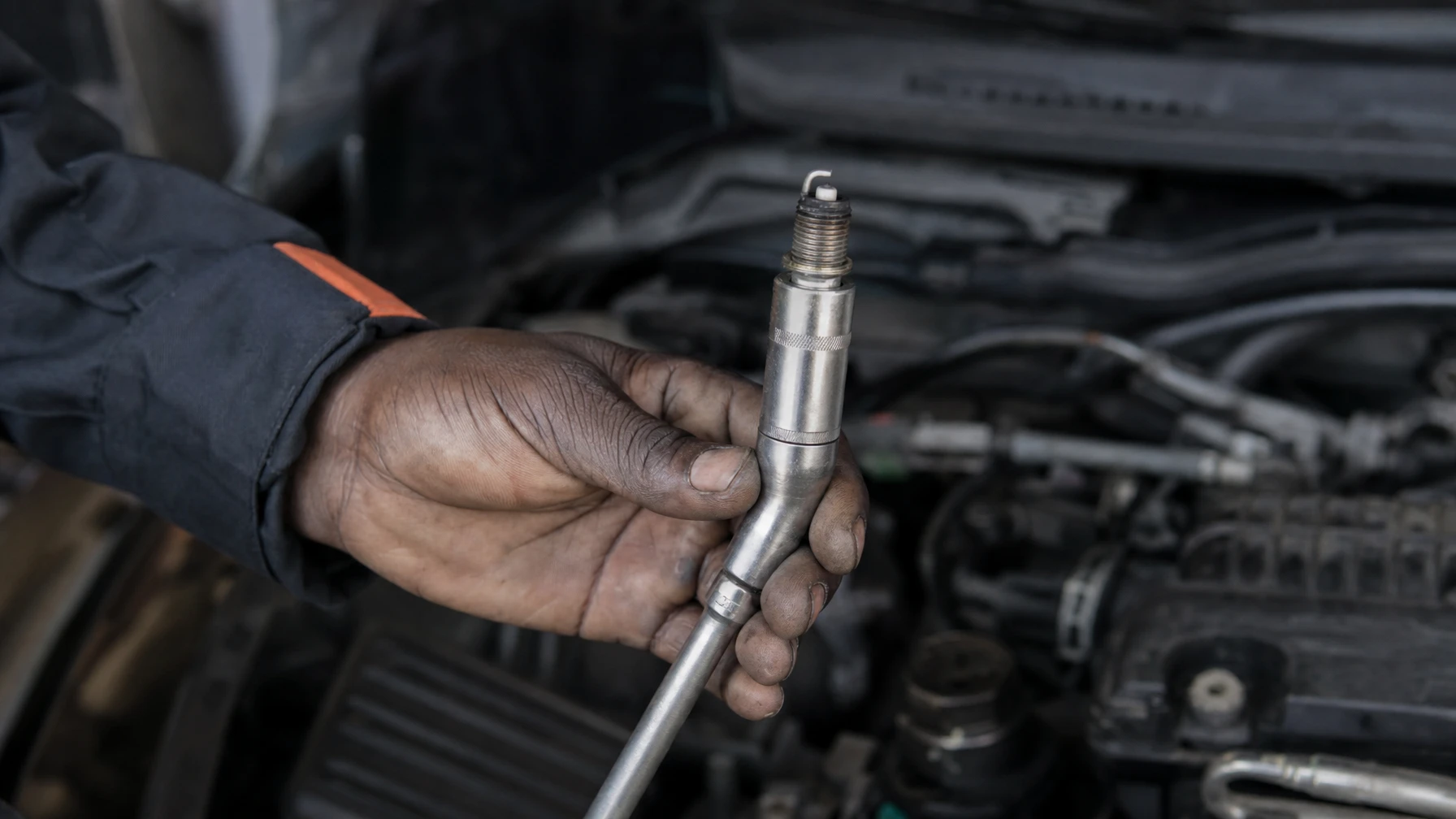
Spark plugs are cheap little parts that do a huge job — and when they finally wear out, you feel it right away in how the car runs. Here’s a straight breakdown of spark plug replacement cost, what moves the price, and the signs it’s time.
How Much Does Spark Plug Replacement Cost?
Spark plug replacement typically runs about $100–$300 across the market, parts and labor combined. Big Tee prices it as labor, with the plugs themselves sourced separately at actual cost — they’re inexpensive either way. What moves the total is how many cylinders you have and how hard the plugs are to reach. A 4-cylinder with the plugs right on top is quick; a V6 or V8 where the rear plugs sit under the intake manifold takes far more labor.
The accurate number for your car comes after a look under the hood — Big Tee quotes the labor in writing before any work.
Plugs and ignition work are part of Big Tee’s engine repair in Decatur, GA — see that page for what else is covered.
What Affects Spark Plug Replacement Cost
- Number of plugs. 4, 6, or 8 cylinders — more plugs, more parts and labor.
- Plug type. Copper, platinum, and iridium plugs differ in price and lifespan.
- Access. Plugs on top of the engine are quick; plugs that require removing the intake or coils take longer.
- Coil-on-plug systems. Some engines need coil packs removed (or replaced) along with the plugs.
Running rough or throwing a misfire code? Call or text Big Tee at (770) 780-0730 — we'll confirm it's the plugs before you pay.
Signs You Need New Spark Plugs
Worn or fouled plugs show up as:
- Rough idle and engine vibration
- Misfires — stumbling, especially under load
- Hesitation or weak acceleration
- Harder starting
- Worse fuel economy
- A check engine light — often a misfire code (and if it’s flashing, that’s urgent: see flashing check engine light)
How Often Do Spark Plugs Really Need Replacing?
The interval depends entirely on the plug material, and the gap between types is bigger than most people expect. Older copper plugs wear fast and are typically due around every 30,000 miles. Modern platinum and iridium plugs use a harder metal tip that resists erosion far longer, which is why manufacturers often spec them for 60,000 to 100,000 miles. The upside is fewer replacements over the life of the car; the downside is that when they finally do wear out, the drop in performance can be gradual enough to go unnoticed until a misfire or a rough idle shows up.
Can You Replace Spark Plugs Yourself?
On some engines, yes. Plugs sitting right on top of a simple 4-cylinder are a genuinely reasonable DIY job with the right socket and a torque wrench — over-tightening a plug can crack the cylinder head, so torque matters. On a V6 or V8 where the rear bank sits under the intake manifold, or where coil packs have to come off first, it stops being a quick weekend job and turns into several hours of disassembly that’s easy to get wrong. The honest test: if you can see and reach the plugs without removing anything else, it’s a reasonable DIY job. If getting to them means pulling other parts first, that’s exactly the labor that makes professional installation worth paying for.
Why Diagnosing Matters Here
A misfire can be spark plugs — but it can also be coils, injectors, or a vacuum leak, all of which look similar from the driver’s seat. Replacing plugs when the real problem was a coil just wastes money. A quick diagnostic confirms the cause first, which matters even more on coil-on-plug engines, where it’s tempting to replace both at once as a precaution when only one component actually failed.
Big Tee handles plugs and ignition work as part of engine repair in Decatur and Metro Atlanta — often mobile, always with a written quote before any work.
Written by the Big Tee Auto Repair team — 29 years of mobile and shop mechanic experience in Decatur, GA and Metro Atlanta.
Related guide: How Much Does Engine Repair Cost?.