A transmission fluid change is one of the best-value services on your car: it’s cheap compared to what it protects. A new transmission can run $3,000–$6,000; the fluid change that helps prevent that failure costs a fraction of it.
Most transmission fluid changes cost $100–$300, depending on your vehicle, the fluid it takes, and whether you get a standard change or a full flush. Here’s the honest breakdown, plus how to tell when yours is due.
Transmission Fluid Change Cost: Change vs. Flush vs. Dealer
| Service | Typical cost | What you get |
|---|---|---|
| Drain & fill (fluid + filter) | $150–$250 | Replaces ~40–60% of fluid; new pan filter |
| Full flush / exchange | $200–$400 | Machine exchanges nearly all fluid |
| Dealer service | $250–$500+ | Same work, dealer labor + OEM fluid |
| CVT / special fluid | $200–$400+ | CVT and some imports need pricier fluid |
| DIY drain & fill | $40–$120 | Fluid + filter only; your labor and disposal |
The two things that move the price most are which fluid your transmission requires and change vs. flush. CVTs and many import automatics need a specific fluid that costs more per quart, and a full flush uses far more fluid than a drain-and-fill — which is why “transmission flush cost” and “fluid change cost” aren’t the same number. If you’re not sure which one your car actually needs, that call belongs in a proper transmission repair inspection rather than a guess at the counter.
Not sure if you need a change or a flush? Call or text Big Tee at (770) 780-0730 — we'll check your fluid and tell you straight what it actually needs.
How Often Should You Change Transmission Fluid?
For most automatics, every 30,000–60,000 miles is a sensible window — but it genuinely depends on the vehicle and how you drive it. Heat is the enemy of transmission fluid, so towing, hauling, and the kind of stop-and-go crawl you get around Atlanta all shorten the interval.
A few notes worth knowing:
- “Lifetime” fluid usually isn’t. Many automakers label the fluid lifetime, but in the real world that often means “lasts the warranty,” not the life of the car.
- If you can’t remember the last change, it’s due. That’s the simplest test there is.
- Manual transmissions use gear oil on their own schedule — usually 30,000–60,000 miles as well.
Signs Your Transmission Fluid Needs Changing
Your transmission usually warns you before it fails. Watch for these:
Transmission Slipping
If the engine revs but the car is slow to actually move or accelerate, that’s slipping, and low or worn-out fluid is a common cause. Slipping should never be ignored; it’s the symptom most likely to turn into a rebuild if you wait.
Rough, Delayed, or Hard Shifts
Clunky shifts, a pause before the car engages when you put it in drive or reverse, or shifts that feel harsh can all point to fluid that’s broken down and lost its protective properties.
Low Transmission Fluid Symptoms and Leaks
A puddle of reddish fluid under the car points to a transmission fluid leak, which has its own set of warning signs separate from a simple low reading. Low fluid causes slipping, overheating, and hard shifts, and the leak itself needs repair — topping it off doesn’t fix where it’s going. A transmission leak repair typically runs from modest (a pan gasket) to more involved (a seal or cooler line), so it’s worth diagnosing early.
What Color Is Transmission Fluid Supposed to Be?
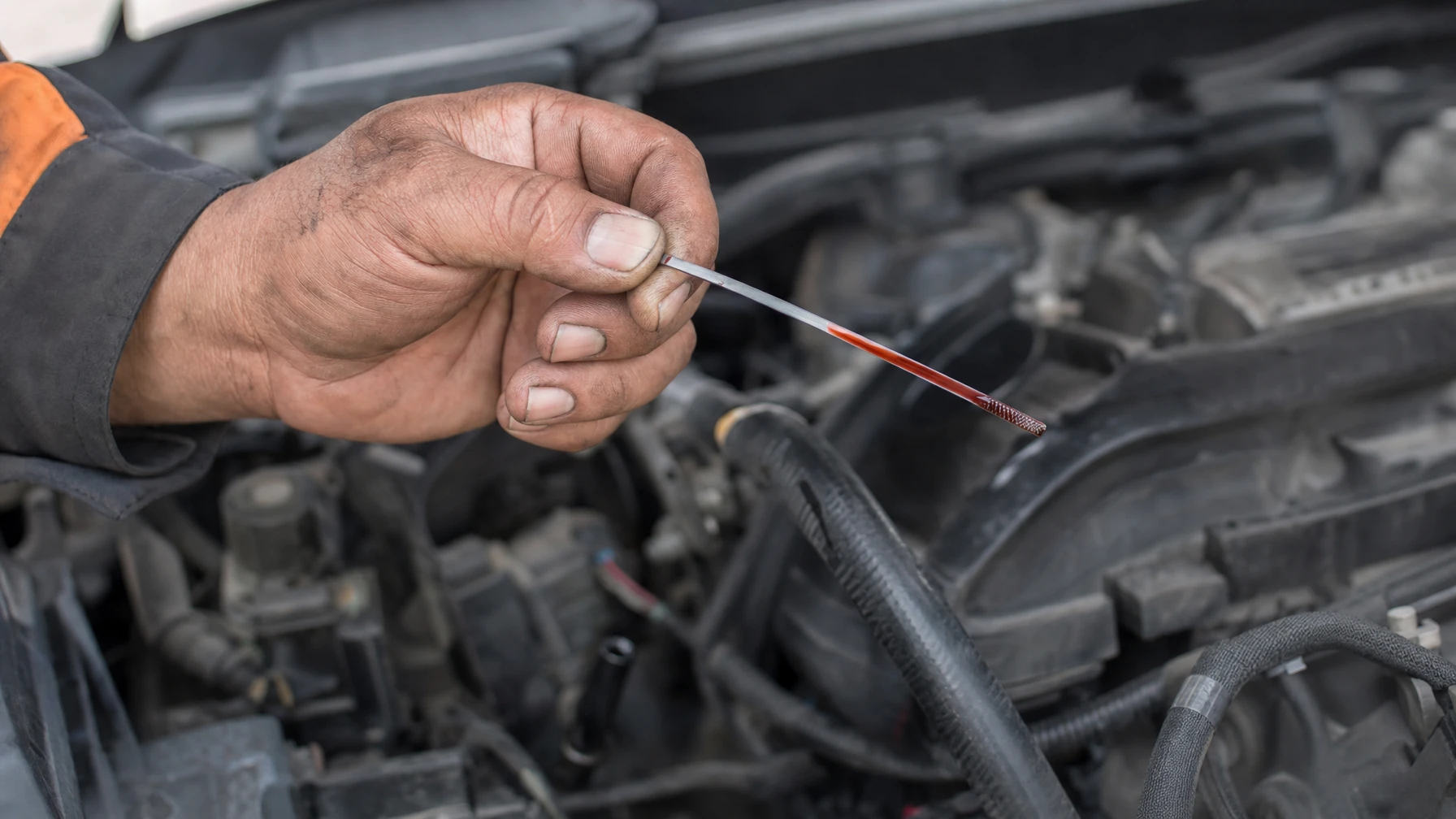
Healthy automatic transmission fluid is bright to dark red and fairly translucent. As it ages it turns brown, and burnt fluid goes dark brown or near-black with a burnt smell — a clear sign it’s overdue. If yours is brown or smells burnt, get it serviced before more damage is done.
How to Check Transmission Fluid Yourself
If your car has a transmission dipstick (many newer ones are sealed and don’t), you can check it yourself in a couple minutes:
- Park on level ground and, for most vehicles, warm the engine and leave it running in park (check your manual — a few require it off).
- Pull the transmission dipstick, wipe it, reinsert it fully, and pull it again.
- Read the level against the marks, and look at the color and smell on the stick.
- Red and translucent is good; brown or burnt means service it; low means you likely have a leak.
If your transmission is sealed with no dipstick, checking and filling is a job for a mechanic with the car on level ground at the right fluid temperature — it’s easy to over- or under-fill, and level matters a lot on these.
Can a Transmission Flush Actually Cause Damage?
On a transmission that’s been on its original fluid for 100,000+ miles, sometimes yes, and it’s worth knowing before you say yes to the more expensive option. Old, worn fluid can carry fine debris that’s gotten trapped in the transmission’s internal passages. A gentle drain-and-fill leaves most of that debris where it is; a high-pressure flush can dislodge it and send it circulating, which on a transmission that’s already struggling can trigger slipping or shifting problems that weren’t there before.
Don’t read that as a reason to skip fluid service. Read it as a reason the right call depends on the transmission’s actual history and its mileage together. A well-maintained transmission with a known fluid-change history handles a flush fine. One that’s never been touched and is already showing symptoms is often better served by a careful drain-and-fill first.
Why Not to Skip It
The math is simple: a fluid change is a few hundred dollars, and a failed transmission is a few thousand. Old fluid loses its ability to lubricate, cool, and create the pressure the transmission needs to shift — so skipping it doesn’t save money, it just defers a much bigger bill.
When Big Tee services your transmission, you get the right service for your vehicle and mileage — not an upsell to a flush you don’t need — with a written price first. A lot of it can happen right in your driveway across Decatur and Metro Atlanta. And if the fluid check turns up a bigger issue, that work picks it up from there, diagnosed first and quoted before anything starts.
Keep the fluid fresh and you keep the transmission. That’s the whole point.
Written by the Big Tee Auto Repair team — 29 years of mobile and shop mechanic experience in Decatur, GA and Metro Atlanta.