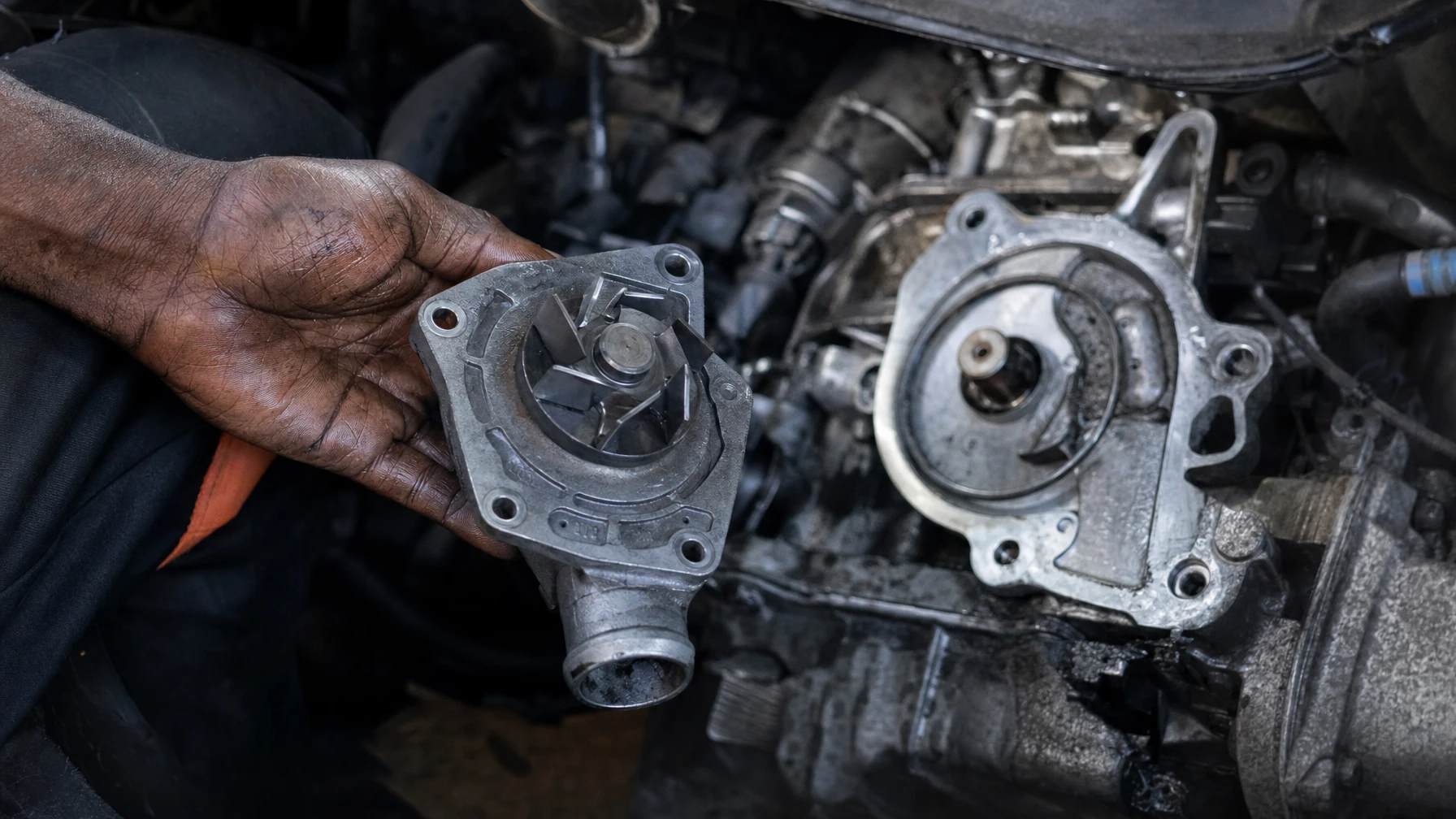
The water pump is the heart of your cooling system — it circulates coolant to keep your engine from overheating. When it fails, things get hot fast. Here’s a straight breakdown of water pump replacement cost, what moves the price, and the signs to watch for.
How Much Does a Water Pump Replacement Cost?
Water pump replacement typically runs about $400–$900 across the market — parts and labor combined. Big Tee prices it as labor instead, with the pump (and timing belt, if bundled) sourced separately at actual cost. The single biggest variable either way: is the pump driven by the timing belt? If it is, the pump sits behind the timing cover, and most of the cost is the labor to get there — which is also why it’s usually replaced together with the timing belt (more on that below). Pumps driven by the serpentine belt are generally easier to reach and less expensive.
The accurate number for your vehicle comes after a look — Big Tee quotes the labor in writing before any work.
This is one piece of Big Tee’s Decatur engine repair work — see that page for the full range.
What Affects Water Pump Replacement Cost
- Timing-belt-driven vs. accessory-belt-driven. The biggest factor by far, because of labor and access.
- Whether you bundle the timing belt. Smart on timing-belt engines — saves paying the labor twice.
- Your vehicle. Make, model, and engine layout; European and performance cars run higher.
Engine running hot or leaking coolant? Call or text Big Tee at (770) 780-0730 — don't risk the engine. We'll find the cause.
Signs of a Bad Water Pump
- Overheating — the headline symptom (see why is my car overheating)
- A coolant leak, often near the front-center of the engine
- A whining or grinding noise from a worn pump bearing
- Steam from under the hood
- Low coolant that keeps dropping
Should You Replace the Timing Belt Too?
If your water pump is timing-belt-driven, replacing the timing belt at the same time is almost always the right call. They live in the same place, the labor to reach them is the expensive part, and a timing belt that later snaps can destroy the engine. Doing both at once is far cheaper than paying that big labor bill twice — and it’s a question worth asking your mechanic up front.
How Long Does a Water Pump Last?
Most water pumps are good for somewhere in the range of 60,000 to 100,000 miles, though the real number depends heavily on the vehicle and how the pump is built. A pump driven by the timing belt is often replaced preventively at the same interval as the belt itself, since the labor to reach it is already being spent — waiting for it to fail on its own just means paying that labor a second time later. A pump driven by the accessory belt tends to get replaced reactively, when it actually starts leaking or making noise, since it’s easier to reach and doesn’t share a service interval with anything else.
Can a Water Pump Fail Without Warning?
Sometimes, yes — and that’s the version worth taking seriously. A pump usually gives some warning first: a growing whine from the bearing, a slow coolant weep, or the temperature gauge creeping up under load. But a pump can also fail suddenly, especially if the bearing seizes or the impeller breaks, and a sudden failure can take the engine from normal to overheating in a matter of minutes with almost no notice. That’s part of why a whining noise or a slowly rising gauge is worth acting on right away rather than waiting to see if it gets worse — the gradual version of this failure is the one you actually get a say in.
The Fix: Diagnose the Cooling System First
Overheating and coolant leaks can come from the water pump — or the thermostat, radiator, hoses, or a head gasket. The cheap causes look like the expensive ones, so a proper diagnosis confirms it’s the pump before you spend. Big Tee handles cooling-system and engine repair for Decatur and Metro Atlanta, with a written quote before any work.
Written by the Big Tee Auto Repair team — 29 years of mobile and shop mechanic experience in Decatur, GA and Metro Atlanta.
Related guide: How Much Does Oil Leak Repair Cost?.