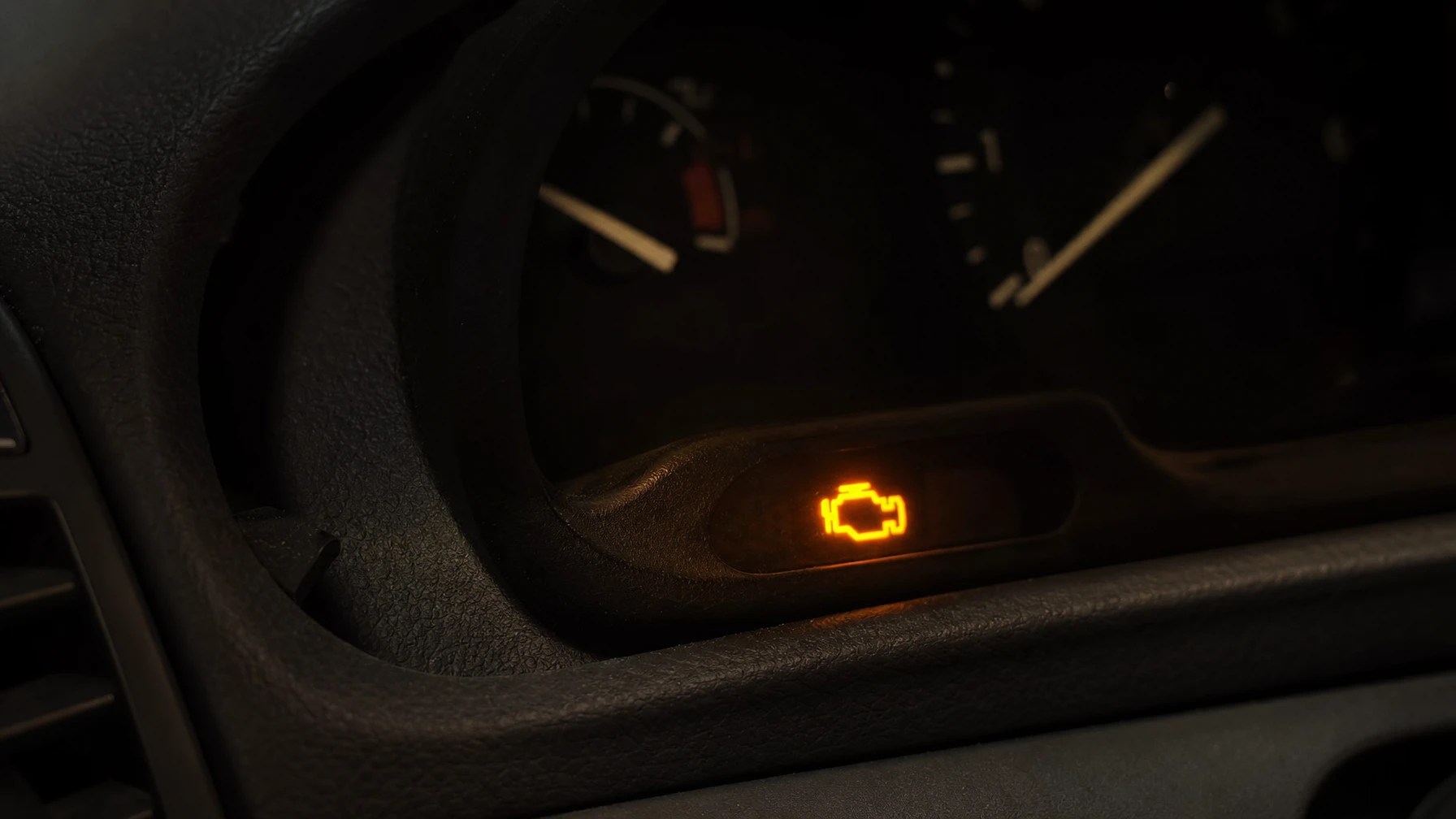
If your check engine light is flashing or blinking, not glowing steady, your car is telling you something different and more urgent. A steady light says “get this checked soon.” A flashing one says “something is going wrong right now.” Here’s exactly what that means and what to do.
What a Flashing Check Engine Light Means
A flashing check engine light almost always means an active engine misfire — one or more cylinders aren’t firing properly, and raw, unburned fuel is being dumped into your exhaust. That unburned fuel superheats your catalytic converter, and a cat is one of the most expensive parts on the car to replace. The flashing is the computer’s way of saying: fix this before it gets worse.
That’s the key difference from a steady light. Steady = soon. Flashing = now. Either way, this is exactly what a check engine light diagnostic is built to pin down fast, rather than leaving you guessing.
Is a Flashing Light Ever Just the Gas Cap?
No. A loose or bad gas cap can trigger a steady check engine light (it throws an evaporative-system code), but it never causes a flashing one. If your light is flashing, the gas cap isn’t the story, and checking it is a waste of the time you should be spending getting the car looked at.
Why Is My Check Engine Light Flashing?
The most common causes of a flashing (misfire) light:
- Worn or fouled spark plugs
- Failing ignition coils
- Bad fuel injectors or fuel-delivery problems
- Vacuum leaks throwing off the air/fuel mix
- Low compression in a cylinder (more serious)
Catching a misfire early usually means a relatively affordable repair. Ignoring it is what turns it into a catalytic-converter bill.
What Code Triggers a Flashing Light?
A misfire sets a P0300 code (random or multiple cylinder misfire) or a cylinder-specific version like P0301 for cylinder 1, P0302 for cylinder 2, and so on. Those codes are exactly why a scan tool reading matters: “misfire” tells you something’s wrong, but the specific cylinder is what actually points a mechanic at the real cause instead of guessing at parts.
Light flashing right now? Call or text Big Tee at (770) 780-0730 — don't keep driving on a misfire. We'll diagnose it fast.
Check Engine Light Flashing and Car Shaking
If the light is flashing and the car is shaking, rough, or losing power, that’s a textbook serious misfire. The shake is the engine running on fewer cylinders than it should. This is the one situation where you should treat it as an emergency: ease off the gas, avoid hard acceleration, and either get straight to a mechanic or pull over safely if it’s severe. Driving hard in this state is how a $300 repair becomes a $2,000 one.
Why Does My Check Engine Light Flash Then Stop?
A light that flashes then goes steady (or off) usually points to an intermittent misfire — the problem only happens under certain conditions, like hard acceleration, a cold start, or a specific temperature. When the condition passes, the active-damage warning stops flashing and the light goes steady. The misfire isn’t fixed, though; it’s just not actively happening at that moment. It still needs to be diagnosed, because intermittent problems become constant ones.
That intermittent pattern is actually useful information for a mechanic. The computer stores a freeze-frame of the conditions present the moment the misfire happened, engine load, temperature, RPM, and more, which narrows down what to test first instead of chasing every possible cause. Try to remember what you were doing when it flashed (cold start, hard acceleration uphill, highway speed, cold or rainy weather) and mention it when you call; that one detail can point a diagnostic straight at the answer instead of starting from zero.
Can You Just Clear the Code and Keep Driving?
You can clear it with a scan tool, and the light will go out, but that doesn’t touch whatever’s actually causing the misfire. The light comes back once the computer sees the same fault again, usually within a handful of miles, and in the meantime you’ve driven on an active misfire without knowing it, which is exactly the situation that damages a catalytic converter. Clearing the code is something a mechanic does after fixing the cause, to confirm the fix worked, not a substitute for finding it.
What a Damaged Catalytic Converter Actually Costs
This is the number that makes ignoring a flashing light expensive. A catalytic converter isn’t a cheap part, and on many vehicles a replacement runs well into four figures once you include labor, which dwarfs the cost of the spark plug or ignition coil that likely caused the misfire in the first place. That gap, a modest ignition part versus a major exhaust component, is the entire reason a flashing light gets treated as an emergency and a steady one doesn’t.
What to Do if Your Check Engine Light Is Flashing
- Reduce load immediately. Ease off the throttle, keep speeds moderate, avoid towing or hard acceleration.
- If it’s shaking badly, pull over somewhere safe and shut it down.
- Don’t “wait and see.” Unlike a steady light, a flashing one is actively risking expensive damage.
- Get it diagnosed now — a misfire is very diagnosable, and the sooner it’s caught, the cheaper it stays.
A real diagnostic will pull the misfire code, identify which cylinder and why, and confirm the fix before you spend on parts. And because Big Tee is a mobile mechanic serving Decatur and Metro Atlanta, we can often come to you, handy when you don’t want to drive a misfiring car across town.
Once the light’s off and the car’s running right again, resetting the check engine light the correct way, rather than disconnecting the battery and hoping, is worth knowing too.
Written by the Big Tee Auto Repair team — 29 years of mobile and shop mechanic experience in Decatur, GA and Metro Atlanta.