That little orange engine symbol on your dash is the most misunderstood light in the car. It doesn’t mean “pull over immediately” (usually), and it doesn’t mean “ignore me” either. Here’s what the check engine light actually means, the most common reasons it comes on, and exactly what to do — from a mechanic who diagnoses these every week in Decatur and across Metro Atlanta.
What Does the Check Engine Light Mean?
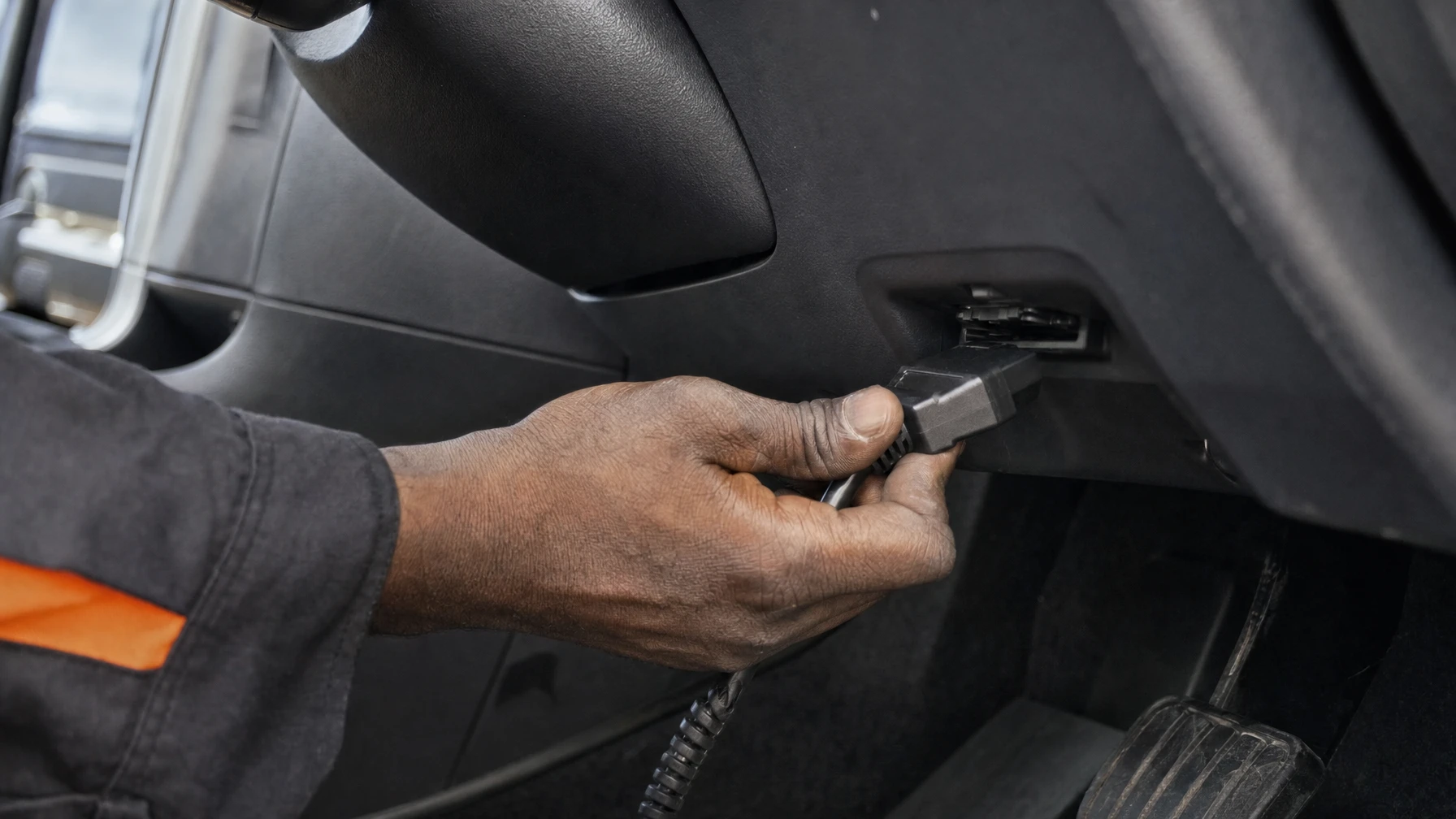
The check engine light is your car’s way of saying its computer detected something outside normal range — in the engine, the emissions system, or a related sensor. When it triggers, the computer stores a trouble code (like P0420 or P0301) that points to the system involved. A real check engine light diagnostic is what actually confirms which part failed.
Important: the light tells you a system is unhappy. It does not tell you the exact failed part. That takes a diagnosis — which is why the parts-store “free code read” is a starting point, not the answer.
Why Is My Check Engine Light On? Common Causes
The vast majority of check engine lights come down to one of these:
- A loose or failing gas cap — yes, really. It’s the cheapest, most common trigger.
- Oxygen (O2) sensor — affects fuel mixture and emissions.
- Spark plugs or ignition coils — a misfire, often paired with rough running.
- Mass airflow (MAF) sensor — throws off the air/fuel calculation.
- Catalytic converter — the expensive one, often caused by an ignored misfire.
- EVAP / emissions leak — a small leak in the fuel-vapor system.
Light on and not sure how serious it is? Call or text Big Tee at (770) 780-0730 — we'll pull the codes and tell you straight.
What a Trouble Code Actually Tells You
Every check engine light stores at least one trouble code, something like P0420 or P0301, and it’s worth knowing what those letters and numbers mean before you Google one late at night. The “P” means powertrain (engine or transmission, as opposed to a “B” for body or “C” for chassis code). The digits that follow identify the specific system: a P03XX code family points to a misfire, a P04XX family points to emissions, and so on. What the code does not do is name the failed part. A P0301 says “cylinder 1 misfire,” not “your spark plug is bad,” because a misfire on that cylinder could be the plug, the coil, a fuel injector, or something else entirely. Reading the code is step one; testing the system it points to is what actually finds the answer.
Steady vs. Flashing Check Engine Light
This is the single most important distinction:
- Steady light — get it checked soon, but it’s usually not an emergency. Keep driving sensibly and book a diagnosis.
- Flashing (or blinking) check engine light — this is urgent. A flashing light almost always means an active misfire dumping raw fuel into your exhaust, which can wreck your catalytic converter fast. If it’s flashing — especially if the car is shaking — ease off the gas and get it looked at right away.
For the full rundown of what’s actually behind that light in the first place, our guide on why your check engine light is on ranks the common causes from cheap to serious.
What to Do When Your Check Engine Light Comes On
- Check for an emergency. Overheating, low oil pressure, or hard shaking with a flashing light? Pull over safely and shut it down.
- Tighten the gas cap. If that was the cause, the light may clear itself after a few drive cycles.
- Note how it’s behaving. Steady or flashing? Any change in how the car runs? That’s useful for the diagnosis.
- Get it diagnosed — don’t just guess or throw parts at it. A real diagnosis finds the actual cause before you spend.
Does a Check Engine Light Fail an Emissions Test?
In most places that require an emissions or safety inspection, yes, an illuminated check engine light is an automatic fail, regardless of what actually caused it. There’s a second, less obvious way to fail too: a recently cleared code. Emissions testing checks something called “readiness monitors,” a set of self-tests the computer runs over normal driving, and clearing the code resets those monitors along with it. A car can show no active code and still fail inspection because its monitors haven’t finished re-running yet, which can take days of varied driving. That’s one more reason clearing a light right before an inspection often backfires instead of helping.
Can You Just Reset the Check Engine Light?
You can clear the light — but if the underlying problem isn’t fixed, it comes right back, and clearing it erases the freeze-frame data that helps pinpoint the issue. Turning the light off without fixing the cause is treating the symptom, not the disease.
How Much Does It Cost to Fix a Check Engine Light?
There’s no single number, because the light is a messenger, not a problem. A gas cap is a few dollars; an O2 sensor is moderate; a catalytic converter is a major repair. What’s consistent is the first step: a proper diagnostic to find the real cause, priced and explained up front under Big Tee’s standard diagnostic policy.
Don’t let a steady light turn into a flashing one. Get the codes pulled, find the cause, and fix the right thing once.
Written by the Big Tee Auto Repair team — 29 years of mobile and shop mechanic experience in Decatur, GA and Metro Atlanta.