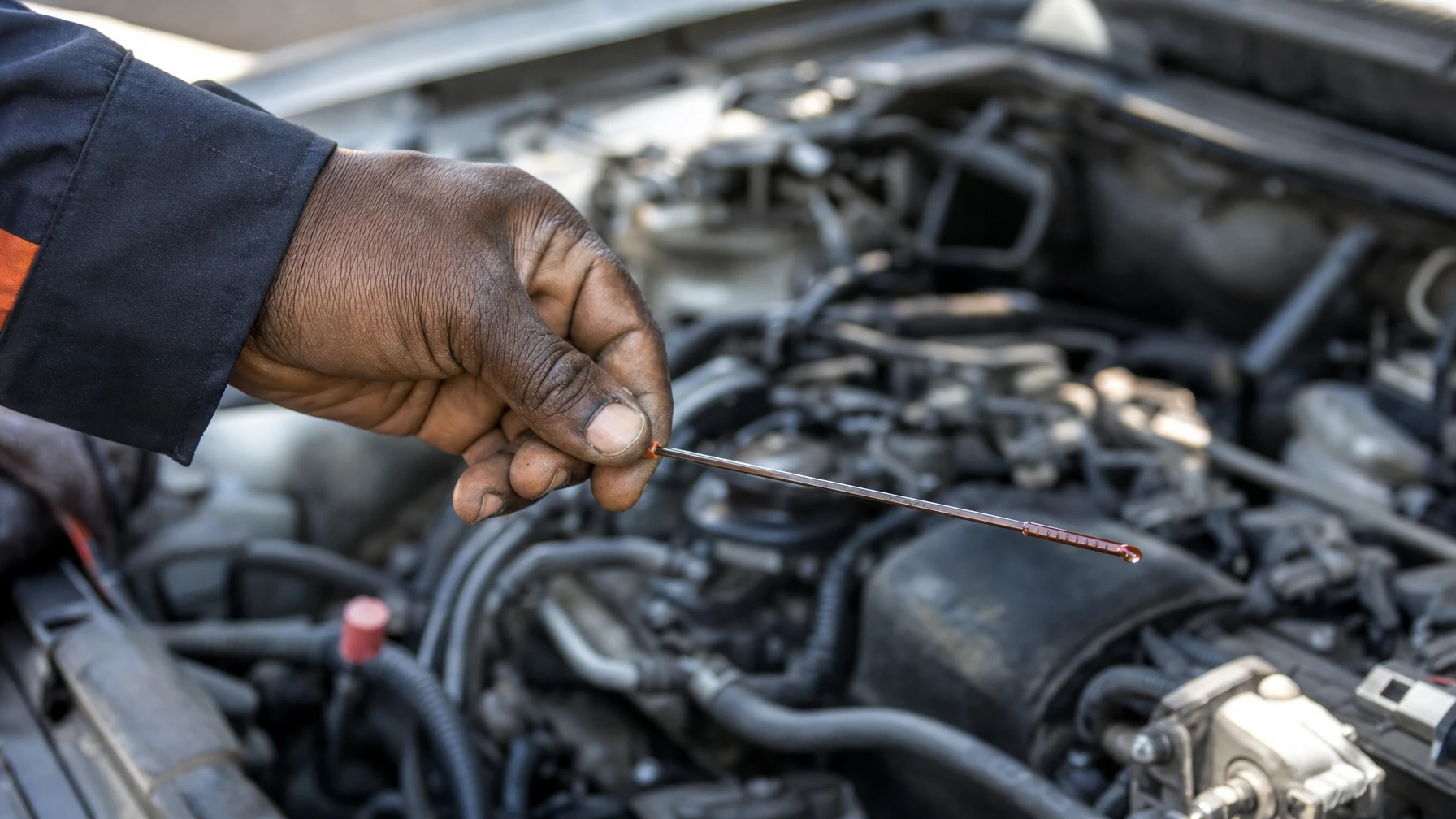
Your transmission depends on fluid for almost everything — lubrication, cooling, and the hydraulic pressure it needs to shift. When that fluid runs low, the transmission starts complaining, and those complaints are worth catching early. Ignored, low fluid is one of the fastest ways to turn a small leak into a multi-thousand-dollar rebuild.
Here are the seven symptoms of low transmission fluid, what’s causing it, and why the fix is never just “add more.”
1. Slipping
The classic sign. The engine revs but the car is slow to respond or accelerate, like the power isn’t fully reaching the wheels. Low fluid means low pressure, and without pressure the transmission can’t hold gear properly. Slipping is the symptom most likely to lead to serious damage if you keep driving, and it’s exactly the kind of thing a transmission repair inspection catches early.
2. Delayed or Hard Shifts
A pause before the car engages when you shift into drive or reverse, or shifts that land with a clunk instead of smoothly. Low fluid can’t build pressure fast enough, so engagement lags or hits hard.
3. A Burning Smell
Transmission fluid cools the unit. When it’s low, the transmission runs hot and the fluid overheats, giving off a distinct burnt smell. That smell means heat is building — and heat is the enemy of every transmission.
4. Transmission Overheating
Related to the smell: a transmission low on fluid can’t shed heat, and some vehicles will throw a temperature warning. Overheating accelerates wear on the clutches and seals inside, so it’s not something to ride out.
5. Gear Hunting or Erratic Shifting
The transmission shifts up and down on its own or can’t seem to settle into the right gear. Low fluid confuses the hydraulics and the shift timing, producing that indecisive, hunting feel.
6. A Warning Light
Many vehicles trigger a transmission temperature light or check-engine light when fluid pressure or temperature goes out of range. Don’t dismiss it — pair it with any of the symptoms above and low fluid moves to the top of the list.
Noticing a few of these? Call or text Big Tee at (770) 780-0730 — we'll check the fluid and find the leak before it costs you a transmission.
7. A Reddish Puddle Under the Car
The tell-tale sign of where the fluid is going. Fresh transmission fluid is red; aged is brown. A reddish or brown puddle under the middle of the car points to a transmission fluid leak — and since the system is sealed, that leak is exactly why the fluid is low.
How Low Does Fluid Have to Get Before You See Symptoms?
There’s no single number, because it depends on where the leak is and how the transmission is built, but the pattern is fairly consistent: symptoms tend to show up well before the fluid is anywhere near empty. Modern automatics run on tight pressure tolerances, so losing even a modest percentage of the total fluid volume can be enough to cause hesitant shifts or a slight slip under load, long before the dipstick (on vehicles that have one) reads dramatically low. That’s actually good news: it means the early symptoms on this list are a genuine early-warning system, not a sign that things are already critical, as long as you act on them instead of waiting for the level to drop further.
Why Topping It Off Isn’t the Fix
Here’s the key thing: a sealed transmission doesn’t use up fluid. If it’s low, the fluid is escaping somewhere — a pan gasket, a seal, a cooler line, or the pan itself. Adding more fluid masks the symptoms for a little while, but it leaks right back out and you’re slipping again soon, now with more wear on the clutches from running low in the meantime.
The right move is to find the leak, repair it, and refill to spec. That’s what actually stops the cycle.
The Most Common Leak Points on a Transmission
Knowing roughly where transmissions typically leak from helps make sense of what a mechanic is checking. The pan gasket, the seal around the perimeter of the transmission pan, is one of the most common, since it’s exposed to road debris and heat cycles over years of driving. Front and rear seals, where the transmission connects to the engine and to the driveshaft, wear out the same way engine seals do. Cooler lines, which carry fluid out to a small radiator-like cooler and back, can develop leaks at their fittings, especially on vehicles that tow or carry heavy loads. None of these are exotic failures. They’re ordinary wear parts, which is also why most of them are a modest, straightforward repair once they’re actually found.
What to Do Next
If you’re seeing these signs, the smart sequence is simple: check the fluid level and color yourself if you’re able to, then get the leak diagnosed before driving on it for days.
Big Tee can handle the whole thing — often right in your driveway in Decatur and Metro Atlanta. We check the fluid, trace the leak, and give you a written price first, whether that turns out to be a seal or something bigger — diagnosed properly, no guessing.
Catch low fluid early and it’s usually a modest repair. Drive on it and it’s the most expensive part of your car. Easy call.
Written by the Big Tee Auto Repair team — 29 years of mobile and shop mechanic experience in Decatur, GA and Metro Atlanta.