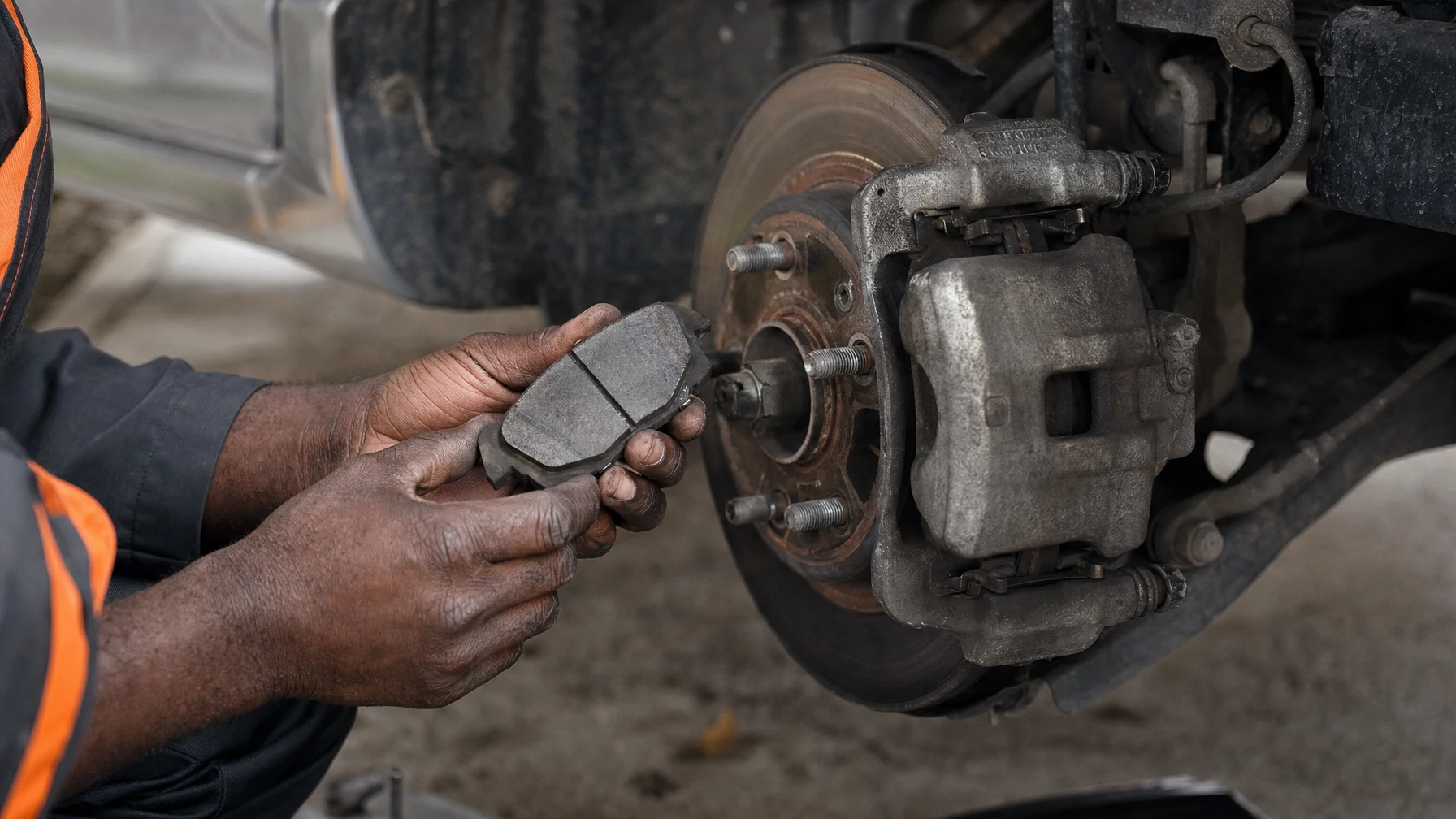
Brakes talk. A squeak, a squeal, or a grind each means something different — and one of them means stop putting this off. Here’s how to read the sounds your brakes are making, which are normal, which are urgent, and what the fix involves.
Why Are My Brakes Squeaking?
A squeak or squeal usually traces back to one of these:
- Worn brake pads. Many pads have a built-in metal wear indicator designed to squeal when the pad gets thin — it’s a deliberate “replace me soon” alarm.
- Glazed or cheap pads. Overheated or low-quality pads can get a hard, glazed surface that squeals.
- Morning moisture or rust. Overnight dampness leaves a thin film of surface rust on the rotors that squeaks until the first few stops wipe it clean.
- Dust and debris. Grit between the pad and rotor can squeak temporarily.
Big Tee covers the whole job — see the brake repair page for Decatur for pricing and what’s included.
The big one to watch for is the wear-indicator squeal — that’s your cue to get the pads checked before they wear out completely.
Why Are My Brakes Grinding?
Grinding is the serious sound. It usually means the pads are worn down to the metal backing and that metal is now grinding directly into the rotor. That does three bad things at once: it damages (scores) the rotors, it reduces your stopping power, and it turns a routine pad replacement into a pad-and-rotor job. If your brakes are grinding, get them inspected right away.
Brakes squealing or grinding? Call or text Big Tee at (770) 780-0730 — brakes aren't the place to wait. We'll inspect and tell you straight.
Squeaking vs. Grinding: Which Is Urgent?
- Occasional light squeak (especially in the morning) → usually fine, keep an eye on it.
- Persistent squeal (often the wear indicator) → get the pads checked soon.
- Grinding → urgent. Metal-on-metal means damage is happening every time you brake.
Why Do New Brakes Sometimes Squeak Too?
It’s a fair question, and yes — freshly installed pads can squeak for the first few hundred miles. New pads and rotors need a proper break-in (sometimes called bedding), where a series of controlled stops transfers an even layer of pad material onto the rotor surface. Until that layer builds up, contact between the pad and rotor is spottier and less consistent, which can produce a temporary squeak even on a correctly installed job. This settles down within the first week of normal driving in the vast majority of cases. If a new brake job is still squeaking loudly after that, it’s worth a second look — sometimes it means the pads weren’t the right compound for that rotor, anti-squeal hardware was skipped, or the rotor surface wasn’t properly prepped before the new pads went on.
Other Brake Warning Signs
Sound isn’t the only clue. Also watch for:
- A shaking or pulsing brake pedal (often warped rotors — see why is my car shaking)
- A soft or spongy pedal (often a brake fluid issue)
- The car pulling to one side when braking
- A longer stopping distance
Any of these means it’s brake-inspection time. One sign alone might be nothing. Two or three together — say, a pulsing pedal plus a longer stopping distance — is a much stronger signal that something’s actually wrong, so it’s worth mentioning everything you’ve noticed when you call, rather than only the most obvious symptom.
The Fix: Inspect, Then Replace What’s Worn
Brakes are a safety system, so guessing isn’t the move. A quick inspection measures pad thickness and checks the rotors, so you replace exactly what’s needed — pads, or pads and rotors if it’s gone that far. For real cost ranges, see brake pad and rotor replacement cost.
Big Tee handles brakes as part of auto repair in Decatur and Metro Atlanta — inspected and fixed with a written quote before any work. Don’t wait on a grind.
Written by the Big Tee Auto Repair team — 29 years of mobile and shop mechanic experience in Decatur, GA and Metro Atlanta.