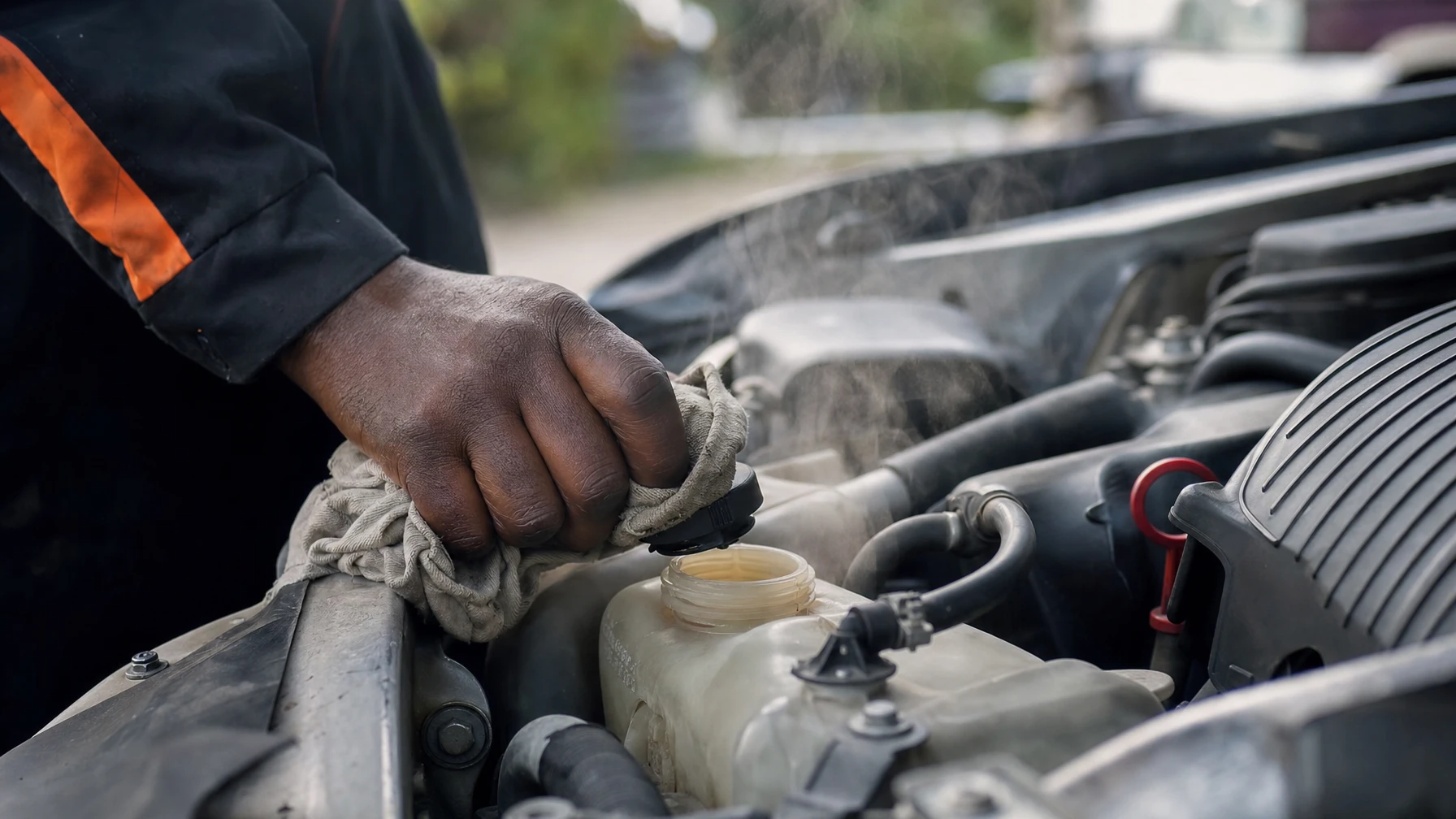
Overheating is one of the few car problems you genuinely cannot drive through. Coolant temperature climbing into the red can turn a modest repair into a blown head gasket — or a destroyed engine — in a matter of minutes. Here’s why cars overheat, what to do the instant it happens, and when to stop.
Why Is My Car Overheating? Common Causes
Several different failures can produce the exact same climbing gauge, which is exactly why engine repair in Decatur starts with finding out which one you actually have before fixing anything.
Low Coolant or a Coolant Leak
The most common cause, by far. If coolant is low — usually because it’s leaking from a hose, the radiator, the water pump, or a gasket — there isn’t enough fluid to carry heat away from the engine. Find the leak, fix it, refill, and the problem often goes with it. Old, neglected coolant is a factor too, which is why a periodic coolant flush is cheap insurance.
A Stuck Thermostat
The thermostat opens to let coolant flow to the radiator once the engine warms up. If it sticks closed, coolant can’t circulate properly and the engine overheats — even with plenty of coolant in the system. It’s a relatively small, common part.
A Failing Water Pump
The water pump circulates coolant through the engine. When it fails — worn bearing, leaking seal, broken impeller — circulation drops and temperatures climb. Often accompanied by a leak or a whine; see water pump replacement cost for what that job runs.
A Clogged or Damaged Radiator
The radiator sheds heat from the coolant. If it’s clogged internally, blocked by debris, or damaged, it can’t cool effectively. A bad radiator cap can cause overheating too.
A Bad Radiator Fan
At low speeds and idle, the cooling fan pulls air through the radiator. If the fan (or its motor/relay) fails, you’ll often see overheating in traffic or at stops, but not at highway speed where airflow is natural.
A Blown Head Gasket (The Serious One)
This is the one everyone fears — and ironically, it’s often caused by ignoring the smaller issues above. A blown head gasket can both cause and result from overheating, and it’s a major repair. All the more reason to address overheating immediately.
Gauge climbing or steam under the hood? Call or text Big Tee at (770) 780-0730 — don't risk the engine. We'll find the cause.
What Does the Temperature Gauge Actually Mean?
Most gauges sit right around the middle during normal driving, and that middle position is normal, not a warning — a lot of drivers aren’t sure where the actual danger zone starts. The needle creeping slightly higher on a hot day in stop-and-go traffic is usually nothing to panic over. The real warning sign is the needle pushing toward the H, into a red zone, or a dedicated warning light coming on — that’s when the engine is genuinely in danger territory and it’s time to pull over. Knowing where your specific car’s normal range sits — a quick glance on a cool morning tells you — makes it far easier to spot the difference between “running a little warm” and “something is actually wrong” days before it becomes a roadside problem.
What to Do When Your Car Overheats
- Turn off the AC and turn the heater to full — it literally pulls heat off the engine and into the cabin (uncomfortable, but it helps).
- Pull over safely as soon as you can and shut the engine off to let it cool.
- Do not open the radiator cap while the engine is hot — pressurized coolant can cause serious burns.
- Once cool, check the coolant level if you can — but the real fix is finding why it overheated.
Can You Drive an Overheating Car?
No. Driving on an overheating engine is how a cooling problem becomes an engine-replacement bill. If the gauge is in the red or you see steam, stop as soon as it’s safe. A short coast to a safe spot is fine; continuing your trip is not.
The Fix: Diagnose the Cooling System, Don’t Guess
Overheating has many possible causes, and the cheap ones look the same as the expensive ones from the driver’s seat. A proper diagnosis of the cooling system finds the actual cause — coolant leak, thermostat, water pump, radiator, or fan — before you spend. Big Tee handles cooling-system and engine repair for Decatur and Metro Atlanta, with a written quote before any work.
Written by the Big Tee Auto Repair team — 29 years of mobile and shop mechanic experience in Decatur, GA and Metro Atlanta.